(+86) 19121971501

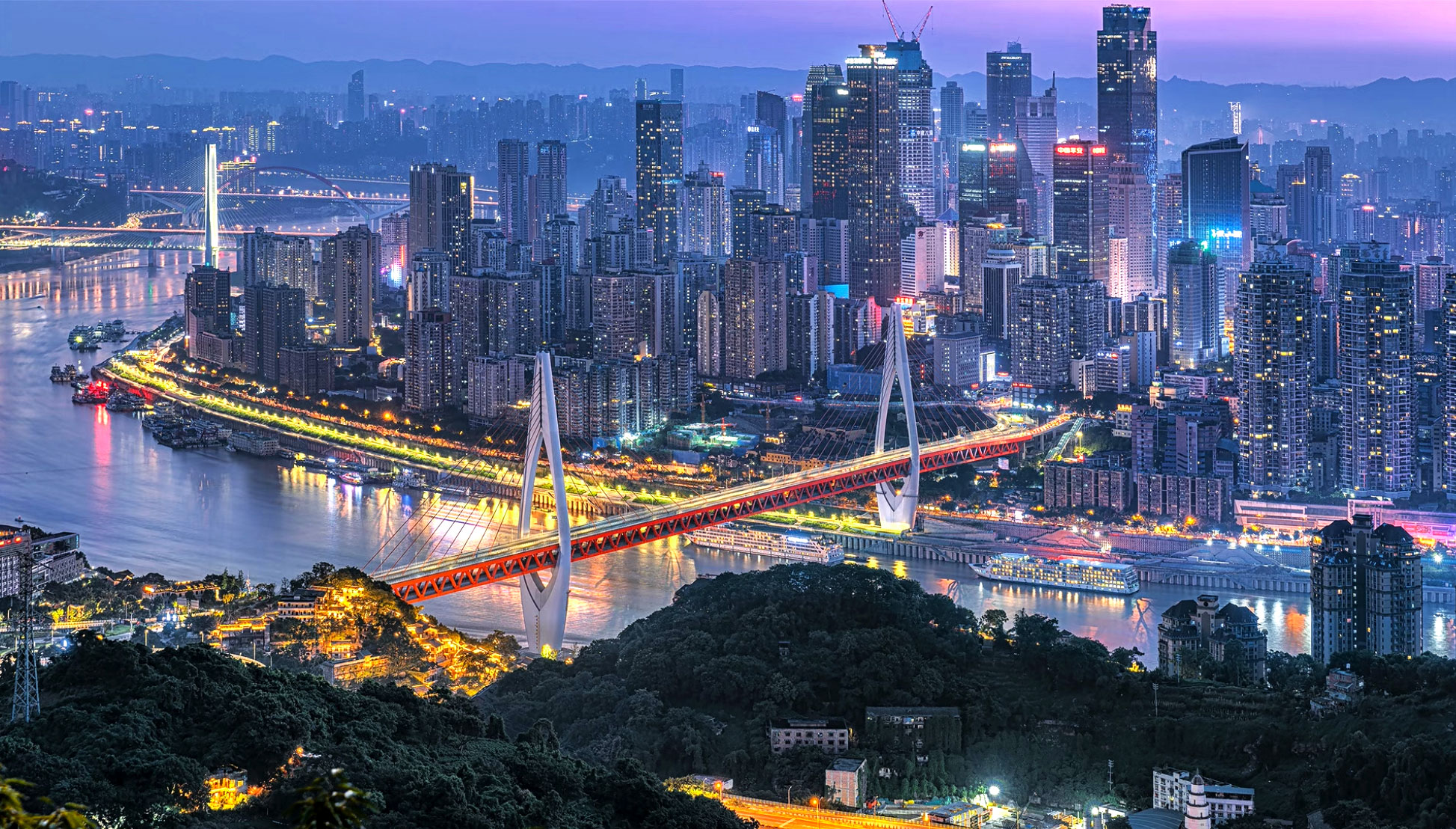
Chongqing is a city where layered urban life is built upon dramatic mountains and flowing rivers. Here, history and modernity, intensity and tenderness intertwine in harmony. Known as the ‘Mountain City’ and the ‘Foggy City,’ Chongqing is three-dimensional in every sense. From the winding rivers and staggered hills to the bustling alleys full of everyday charm, every corner tells stories of a rich past and cultural depth.
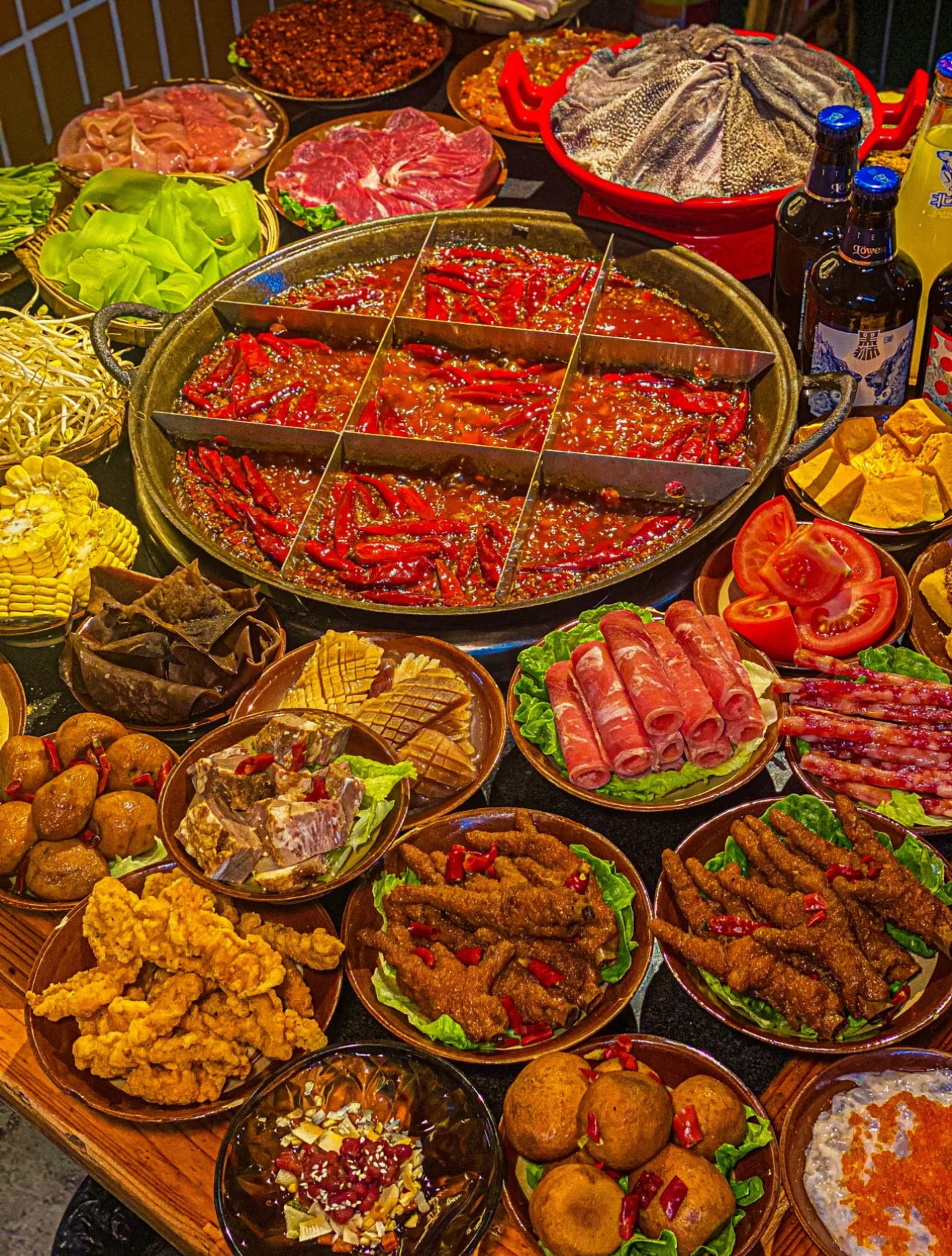
Chongqing cuisine is famed for its bold flavors and unique character. Hotpot is the city’s culinary symbol — a bubbling pot filled with chili oil and spices, where you dip in ingredients like beef tripe, duck intestines, and pork aorta. The numbing spice explodes on your tongue, creating an irresistible sensation.
Chongqing noodles may look simple, but the secret lies in the 12 spices meticulously blended in its broth. The chewy noodles and flavorful soup make it a beloved breakfast staple.
Don’t miss the street-style ‘jianghu’ dishes like spicy chicken, blood curd stew (mao xue wang), and Wanzhou grilled fish. Local snacks like hot and sour glass noodles and sweet glutinous rice balls also offer a taste of the city’s culinary soul.
‘Numbing and spicy’ isn’t just a flavor — it’s the key to understanding Chongqing’s fiery personality.
Chongqing’s festivals are lively and deeply rooted in tradition. From the dazzling Lantern Festival and thrilling Dragon Boat Races to the symbolic Water Lanterns of the Ghost Festival, local customs reflect a strong spiritual and cultural identity.
The city preserves many traditional crafts:
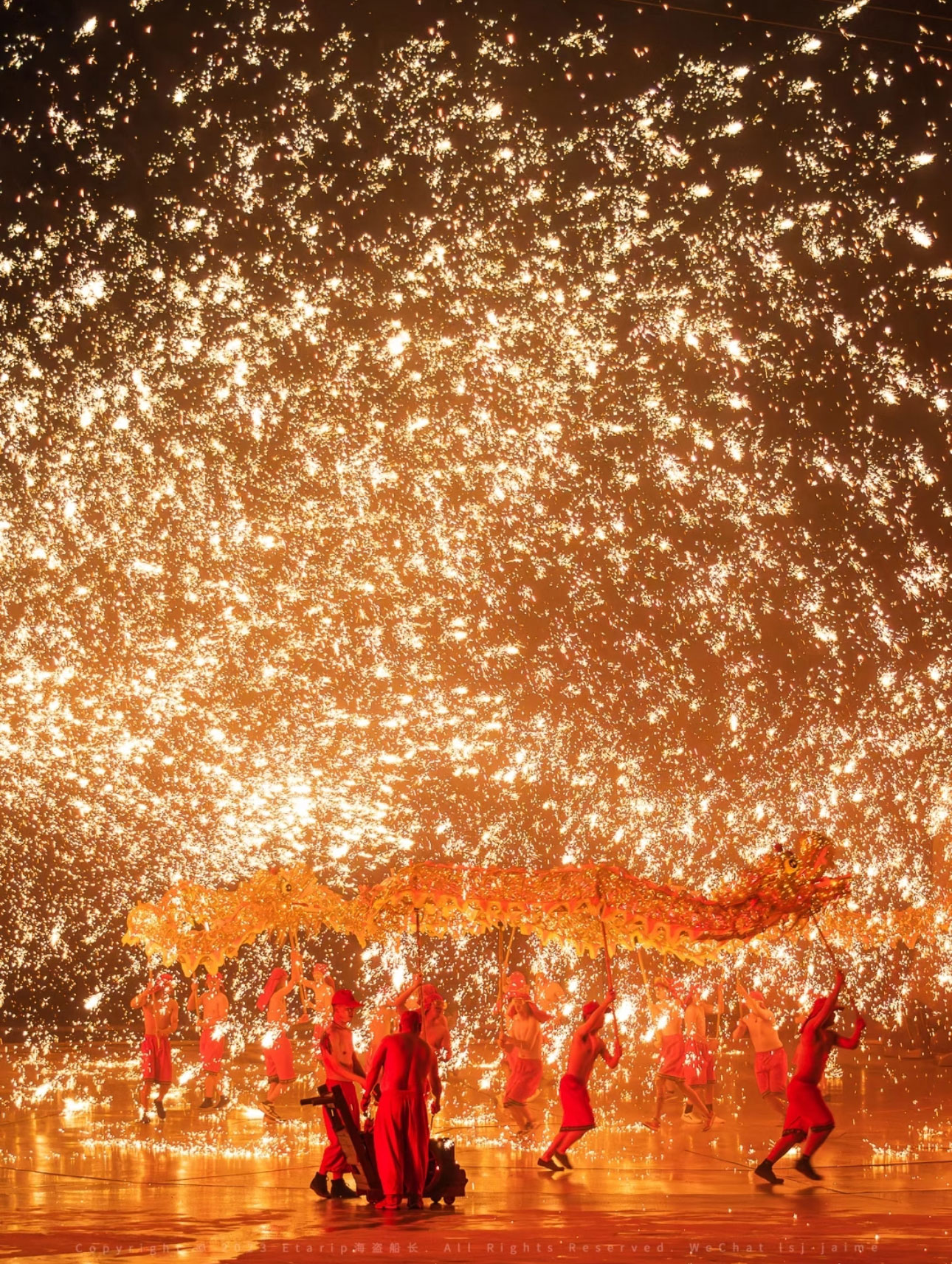
• Tongliang Dragon Dance, where massive dragons leap through fireworks and drumbeats.
• Jiangjin Bamboo Weaving, a testament to rural ingenuity.
• Youyang Hand-Waving Dance, a cultural heritage of the Tujia ethnic group.
The River Work Songs (Chuanjiang Haos) echo the strength of boat trackers battling the current.
The Liangping Woodblock New Year Prints, with their rustic charm and vivid colors, capture the people’s hopes and blessings for the future.
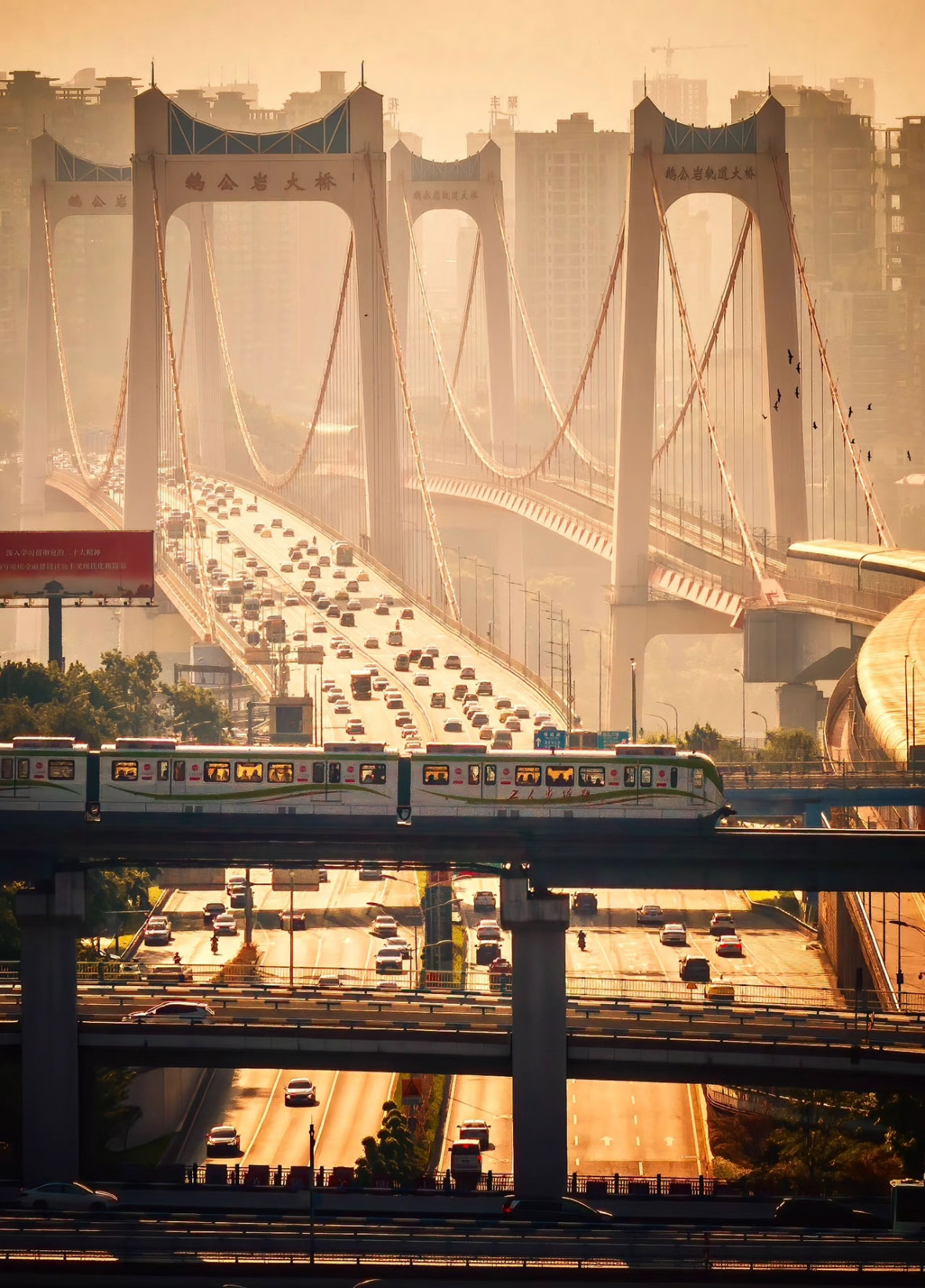
Chongqing is often called an ‘8D magical city’ — a place where the terrain defies logic.
Monorails pass straight through buildings, overpasses crisscross like spaghetti, and winding roads challenge even the best GPS systems. Around every corner lies an unexpected surprise.
The city blends nature and modernity with ease. You can switch between skyscraper skylines and tranquil mountain scenes within minutes — a one-of-a-kind urban journey.
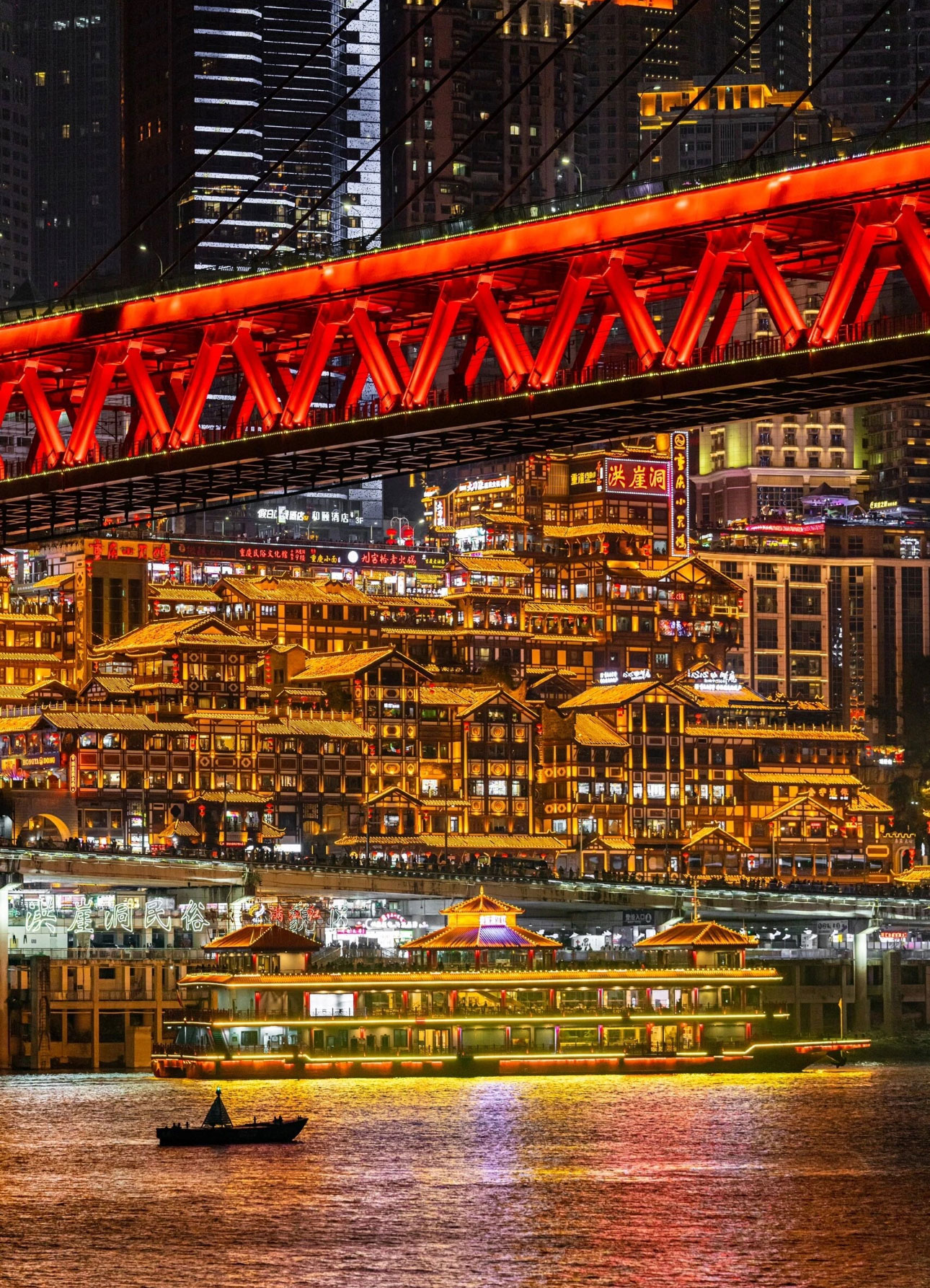
By day, the city pulses with local life; by night, it transforms into a sea of lights. Ride the Yangtze River Cableway, explore the glowing Hongya Cave, or take in panoramic views from Nanshan’s ‘One Tree’ viewpoint. Whether shrouded in morning mist or sparkling under the night sky, Chongqing always delivers a visual spectacle.
Hongya Cave : A real-life scene from Spirited Away, this stilt-house complex clings to the mountainside above the river. At night, the glowing lights reflected on the water create a dreamy wonderland — a must for photos and memories.
Jiefangbei (Liberation Monument) : Chongqing’s iconic landmark and the only monument in China commemorating a wartime victory. Surrounded by shops and eateries, it represents both the city’s past glory and present prosperity.
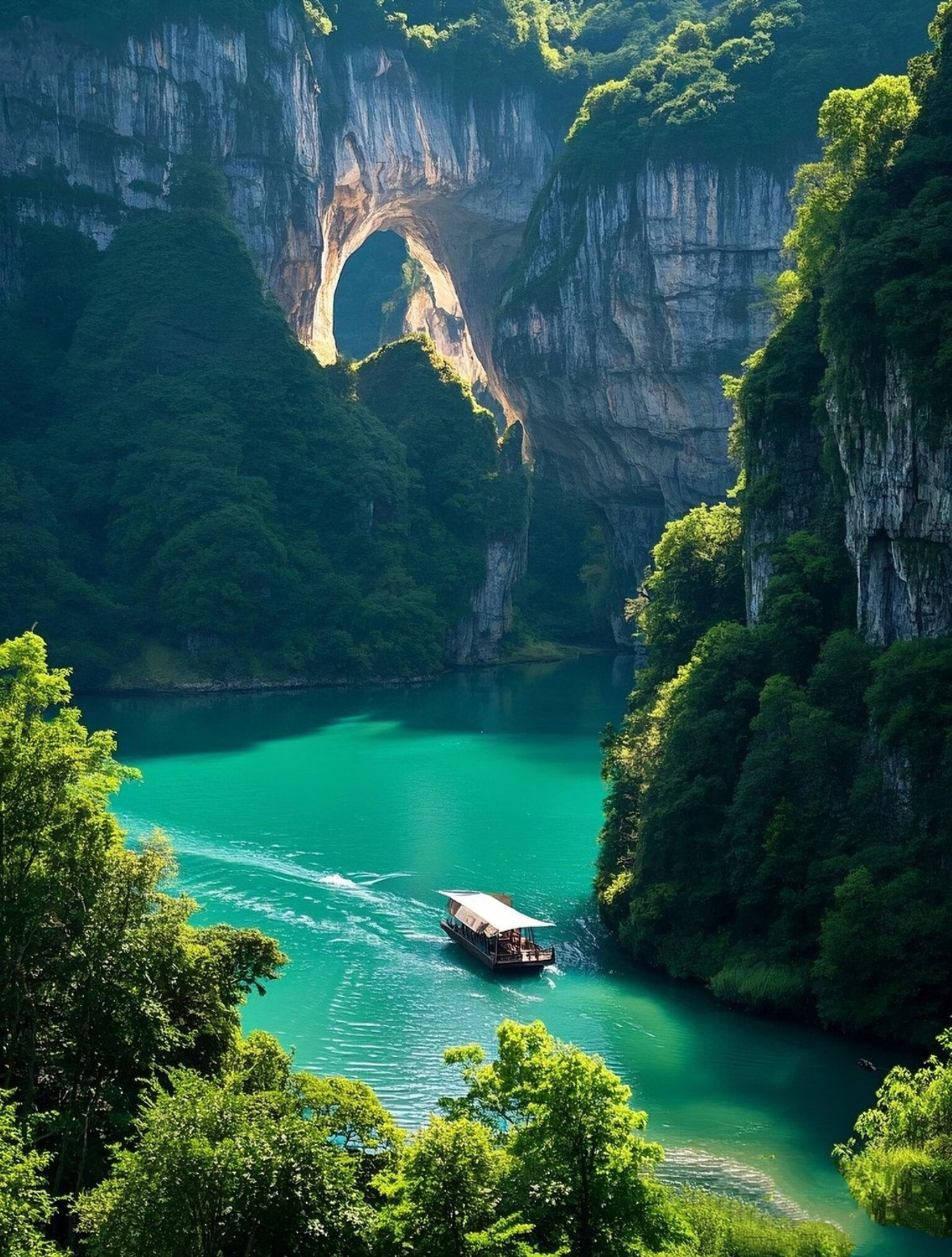
Wulong Karst — Three Natural Bridges : Marvel at nature’s craftsmanship through sky-high stone bridges, sinkholes, and gorges. As filming locations for Curse of the Golden Flower and Transformers 4, these landscapes blur the line between reality and fantasy.
Dazu Rock Carvings : A UNESCO World Heritage Site showcasing Buddhist art from the Tang and Song dynasties. Tens of thousands of intricate stone statues bring religious stories vividly to life, demonstrating the skill and devotion of ancient artisans.
Yangtze River Cableway : Soar across the river in a suspended cabin, taking in panoramic views of the city’s layered beauty — a ride that embodies the three-dimensional charm of Chongqing.
Curious where your China journey could take you? Start here and tell us what you’re dreaming of.
SIGN UP